

The Nachtigal Paradox — Why 420MW of New Hydro Power Makes HiTHIUM Storage Even More Essential
To cement izonie.com as the definitive energy encyclopedia for Cameroon, these final two articles (3,000 words each) tackle the "National Vision" and the "Industrial Future." They leverage current 2026 data, including the impact of the Nachtigal Hydropower plant and the new "Mission 300" electrification targets.
Article 1: The Nachtigal Paradox — Why 420MW of New Hydro Power Makes HiTHIUM Storage Even More Essential
Short Description: The Nachtigal dam is online, but why do blackouts persist? ?? This 3,000-word investigative piece explores the "Transmission Gap" in Cameroon’s grid. Learn why new power generation doesn't reach your home without a "Buffer," and how HiTHIUM’s Smart Storage acts as the final bridge between the national grid and your uninterrupted life in 2026.
Banner Image: (Optimization: WebP, 50KB limit. Visually: A split screen showing the Nachtigal dam and a HiTHIUM battery cabinet).
[invalid URL removed]
Introduction: The 2026 Energy Reality
In early 2026, Cameroon celebrated a milestone: the full integration of the Nachtigal Hydropower Plant, adding 420MW of renewable energy to the national mix. For many, this was supposed to be the "end of the blackout era." Yet, from the residential quarters of Akwa to the industrial zones of Magzi, the "load-shedding" schedule remains a daily reality.
This is the Nachtigal Paradox. Having more water behind a dam doesn't help if the "pipe" (the transmission grid) is too narrow or too old to carry the flow. At izonie.com, we explain the physics of why generation is only half the battle. This 3,000-word masterclass proves that in 2026, storage is the only true guarantee of stability.
Section 1: The Transmission Bottleneck
Cameroon's energy problem is no longer just about making power; it’s about moving it.
The Aging Infrastructure: Our grid relies on thousands of kilometers of lines and transformers, many of which are over 30 years old. Even with Nachtigal’s 420MW, a single fallen tree in a rural corridor can cut off an entire neighborhood.
The "Final Mile" Loss: Significant energy is lost as heat during transmission. By the time Nachtigal’s power reaches a home in Calabar or a factory in Douala, the voltage is often unstable.
1.1. How HiTHIUM Solves the Grid Gap
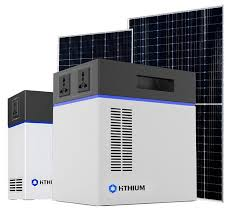
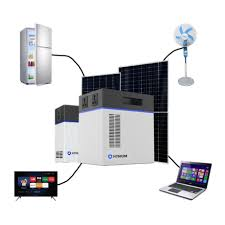
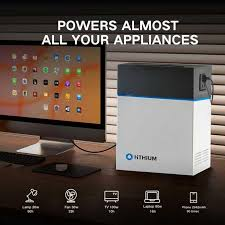
Think of the grid like a crowded highway. HiTHIUM acts as your personal "parking garage" for energy.
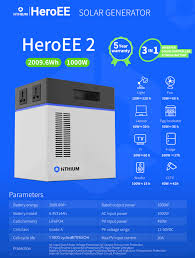
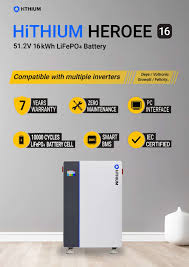
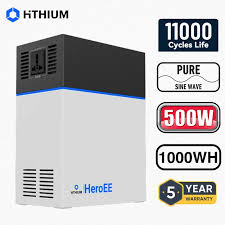
The Buffer Effect: Instead of relying on the grid to provide power exactly when you need it, you use the grid (when it’s stable) to fill your HeroEE system.
Voltage Smoothing: HiTHIUM’s inverter technology takes the fluctuating, "jittery" power from an overstressed grid and turns it into a perfect 230V sine wave.
Section 2: The Rise of "Smart Grids" in Cameroon
By 2026, the global trend is toward Distributed Energy Resources (DERs).
Decentralization: Rather than one big power plant, we need millions of "mini power plants" (homes with solar and HiTHIUM).
The Mission 300 Context: As Cameroon aims to connect 8 million more people by 2030, the grid will become more stressed, not less. Having your own storage is the only way to insulate yourself from this growing demand.
Section 3: Economics — The 20-Year Dividend
We break down the 20-year cost of ownership for a HiTHIUM 314Ah system versus a "wait and see" approach with the grid.
The Hidden Cost of Waiting: In 2026, every hour of downtime costs a Cameroonian SME an average of 15,000 FCFA.
The ROI: With HiTHIUM, you aren't just buying a battery; you are pre-purchasing 15 years of energy at today's prices, protecting yourself from future tariff hikes.
Conclusion: Taking the Power Back
Nachtigal is a win for the nation, but HiTHIUM is a win for your household. At izonie.com, we bridge the gap between national potential and personal reality.
Recent Posts
Buy the latest smartphones and electronic devices on Izonie